
Water Heater Replacement Cost in Arizona: 2026 Price Guide
Water heater replacement cost in Arizona: 2026 national average prices, gas vs electric vs tankless, permits, and what drives the final bill.
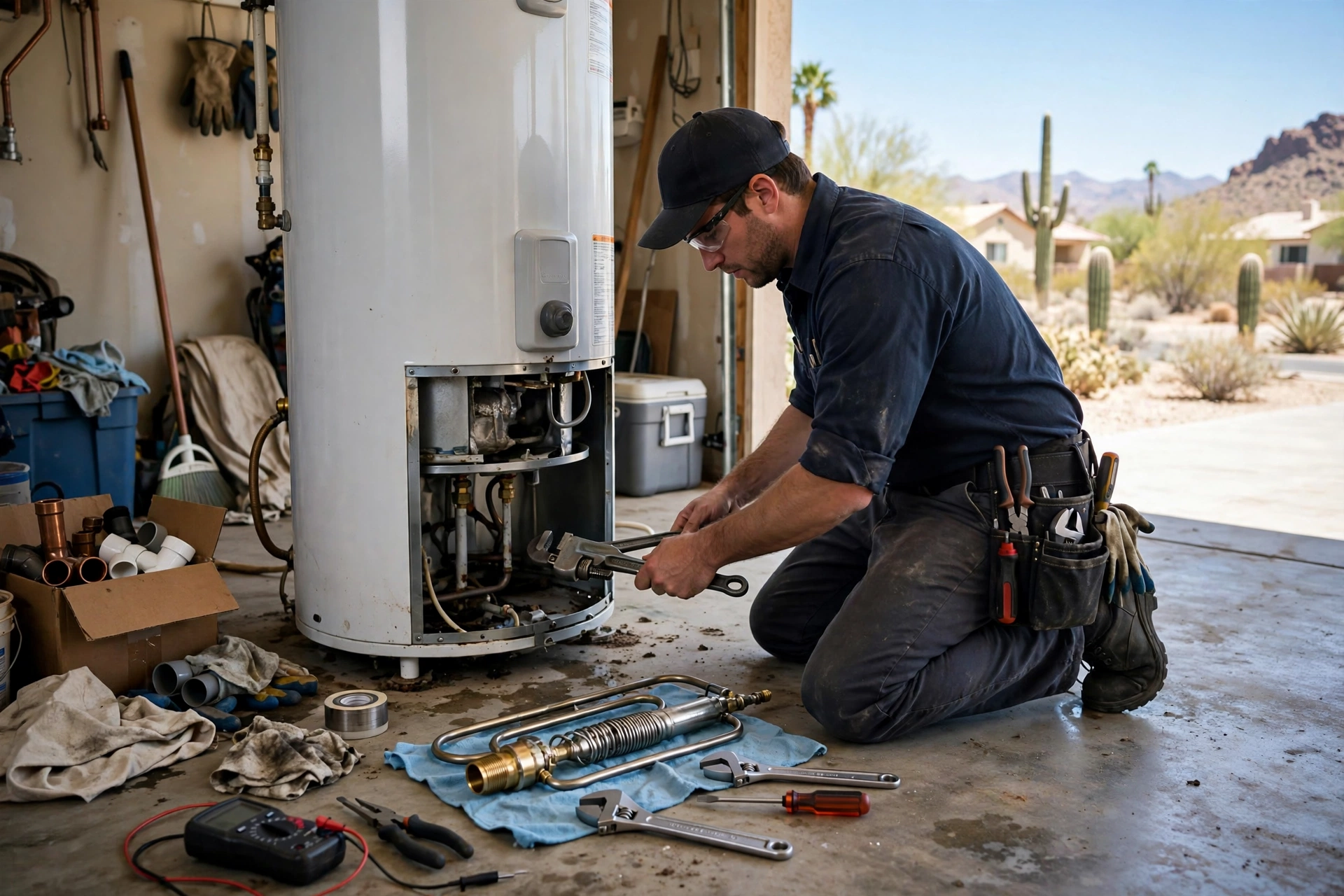
If your water heater is on its last legs, the first question is usually the simplest one: how much is this going to cost me? This guide walks through water heater replacement cost in Arizona for 2026, what national industry averages look like, which factors move the number up or down, and how Arizona's hard water, heat, and permit rules change the math for local homeowners.
Short answer: what does water heater replacement cost in Arizona?
Based on national industry averages, a standard tank water heater replacement typically runs $1,200 to $2,500 installed, including the unit, labor, permits, and haul-away of the old tank. A tankless water heater installation typically runs $2,500 to $5,500 installed, because the unit itself costs more and the installation is more involved. Repair jobs, by comparison, usually fall in the $150 to $700 range depending on the part. These are national averages, not quotes, and your actual price depends on tank size, fuel type, venting, permits, and how complicated the swap is. For a straight answer about your specific setup, call Arizona Water Heater Repair at 1 (844) 495-3109.
National average replacement costs by type
Every cost figure in this article is a national industry average, not a price quote from any company. Prices vary by region, installer, and the details of your home. Use these ranges to set expectations before you talk to a contractor.
| Water heater type | Typical installed cost (national average) | Notes |
|---|---|---|
| Standard electric tank (40-50 gal) | $1,200 to $2,000 | Most common like-for-like swap |
| Standard gas tank (40-50 gal) | $1,400 to $2,500 | Venting and gas line work add cost |
| High-efficiency tank (gas or electric) | $1,800 to $3,000 | Better insulation, lower running costs |
| Tankless (gas or electric) | $2,500 to $5,500 | Unit cost plus venting, gas line, or electrical upgrades |
| Heat pump (hybrid) water heater | $2,000 to $4,000 | High efficiency; needs space and airflow |
These ranges assume a professional installation with required permits. A "like-for-like" swap, where the new unit is the same fuel type and size and sits in the same spot, lands near the bottom of each range. Anything that requires new venting, a bigger gas line, an electrical panel upgrade, or code corrections moves you toward the top.
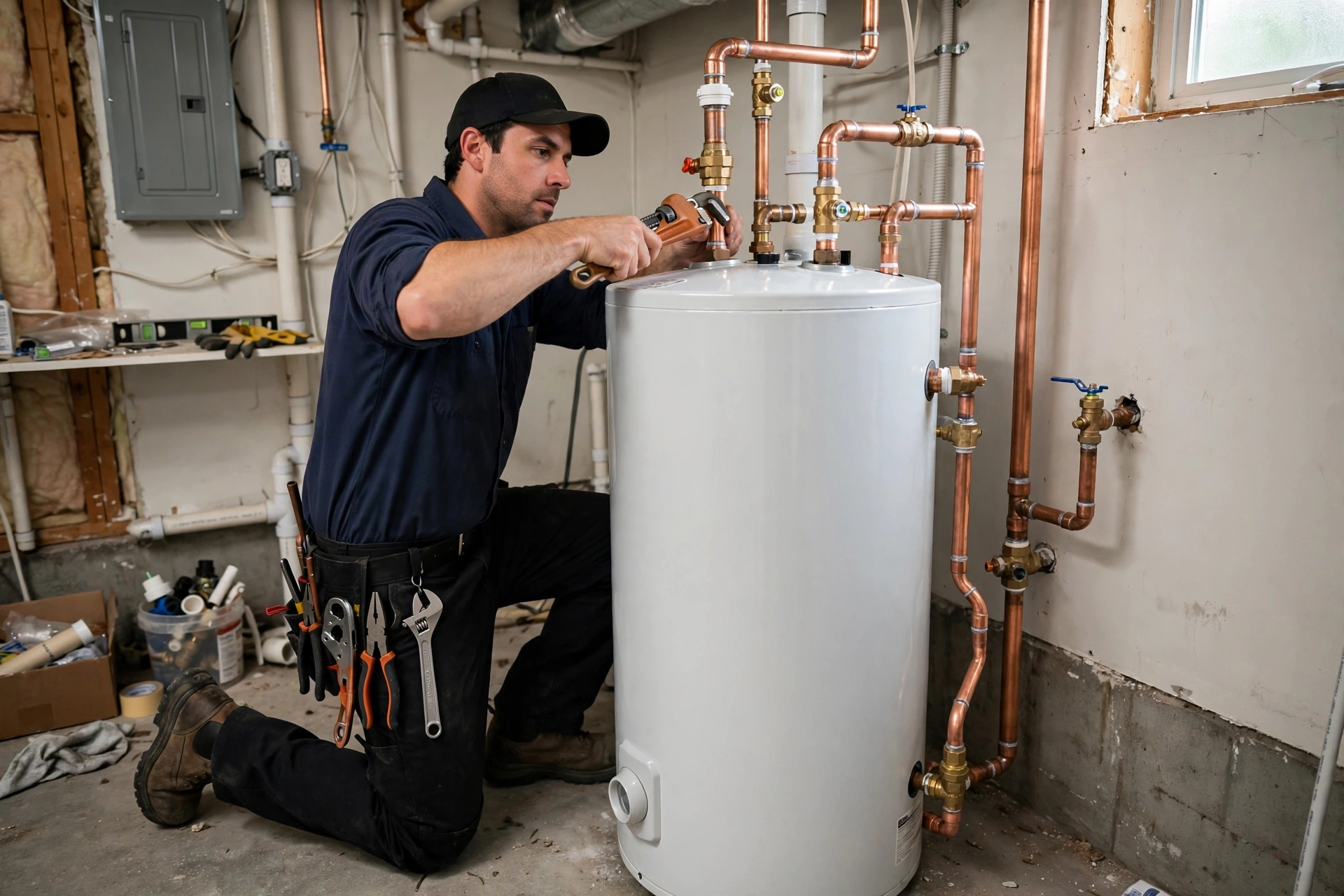
What drives water heater replacement cost up or down
1. Fuel type: gas vs. electric
Gas tank water heaters usually cost more to buy than comparable electric models, but the installation is where gas often adds real money. A gas swap involves the gas supply line, venting, and combustion air requirements, and any of those that need correction adds labor and parts. Electric swaps are mechanically simpler, which is why they tend to land lower in the installed-cost range. If you are switching fuel types entirely, for example going from electric to gas, expect the project to jump significantly because you are adding gas piping and venting that did not exist before.
2. Tank size and household demand
A 40-gallon tank suits most two-to-three person households, while larger families often need 50 gallons or more. Bigger tanks cost more for the unit itself and can require more labor if clearances are tight. One of the most common mistakes homeowners make is replacing an undersized tank with another undersized tank. If you regularly run out of hot water, this replacement is your chance to size correctly. A contractor should ask about your household size, simultaneous use (showers plus laundry, for instance), and recovery expectations before recommending a size.
3. Tank vs. tankless
Tankless units cost more upfront, sometimes two to three times a comparable tank installation. The unit itself is pricier, and installation often requires new stainless steel venting, a larger gas line, or upgraded electrical circuits. What you get in return is an endless supply of hot water, a much smaller footprint, and lower standby energy losses, since the unit only heats water when you call for it. Whether that trade pays off depends on your household's hot water habits and how long you plan to stay in the home. See our comparison section below for the Arizona-specific angle.
4. Permits and code compliance
Most Arizona cities require a permit for water heater replacement, especially when a gas line or venting is involved. Permits are not just paperwork; the inspector verifies that venting, gas connections, the temperature-and-pressure relief valve, and seismic strapping meet current code. If your old installation predates current code, the replacement may need corrections like a proper expansion tank, updated venting, or a drain pan, and those corrections add to the total. A reputable installer handles the permitting as part of the job. If a bid is dramatically cheaper than others, ask whether permits and code corrections are included.
5. Location and accessibility
A water heater sitting in an open garage is a fast, easy swap. The same unit crammed into a tight attic, a closet with no working room, or a basement with a narrow staircase costs more to replace because the crew spends more time and effort getting the old one out and the new one in. Haul-away and disposal of the old tank is usually included, but confirm it in writing.
6. Emergency and timing premiums
A planned replacement scheduled on a normal weekday costs less than an emergency water heater repair at 9 p.m. on a Saturday. If your tank fails suddenly and you need hot water restored immediately, after-hours and weekend premiums apply. This is one reason to replace a tank that is clearly aging rather than waiting for it to fail catastrophically.
Real talk: the cheapest bid is not always the cheapest outcome. A low quote that skips the permit, reuses corroded venting, or ignores code corrections can cost you far more when an inspector flags the work or a failed connection causes damage. Ask every bidder the same questions: permit included, haul-away included, and what code corrections are in the price.
What a complete replacement quote should include
When bids arrive, the numbers only mean something if they cover the same scope. A complete, professional water heater replacement quote should list each of the following, and a bid that omits several of them is not actually cheaper, it is just incomplete.
- The unit itself, with brand, model, capacity, fuel type, and warranty terms. A 6-year warranty tank costs less than a 12-year warranty tank from the same manufacturer, and you should know which one you are being quoted.
- All labor for removal of the old unit and installation of the new one, including any helpers needed for difficult access.
- Permit fees and inspection scheduling. In most Arizona cities the installer pulls the permit, but confirm this in writing rather than assuming it.
- Code corrections. Common ones in Arizona include expansion tanks, updated venting, temperature-and-pressure relief discharge piping run to a proper termination point, drain pans where required, and seismic strapping. Each has a real cost, and discovering them mid-job leads to the dreaded "while we are in there" upcharges.
- Haul-away and disposal of the old tank. Water heaters are heavy and contain materials that should not go in a regular trash pickup.
- Startup, testing, and cleanup. The job is not done when the tank is connected. The installer should fill and purge the tank, verify the thermostat setting, check for gas or water leaks, confirm proper venting draft on gas units, and leave the work area clean.
Warranty deserves a closer look because it affects both price and long-term cost. Tank warranties typically run 6, 9, or 12 years, and the longer-warranty models usually have thicker tank linings or additional anode protection, which genuinely extends life in hard-water areas like Arizona. Paying a few hundred dollars more for a longer-warranty tank is often the best value in the bid, because it pushes the next replacement further into the future. Ask whether the warranty covers parts only or parts and labor, and who handles the warranty claim if something fails.
Tank vs. tankless in Arizona: the cost picture
Arizona adds a few wrinkles to the tank-versus-tankless decision. Our hard water is rough on tank-style heaters, since sediment and mineral scale accumulate on the bottom of the tank and shorten its life. Tankless units are less affected by sediment buildup, but they still need periodic descaling in hard-water areas, and that maintenance has a cost too.
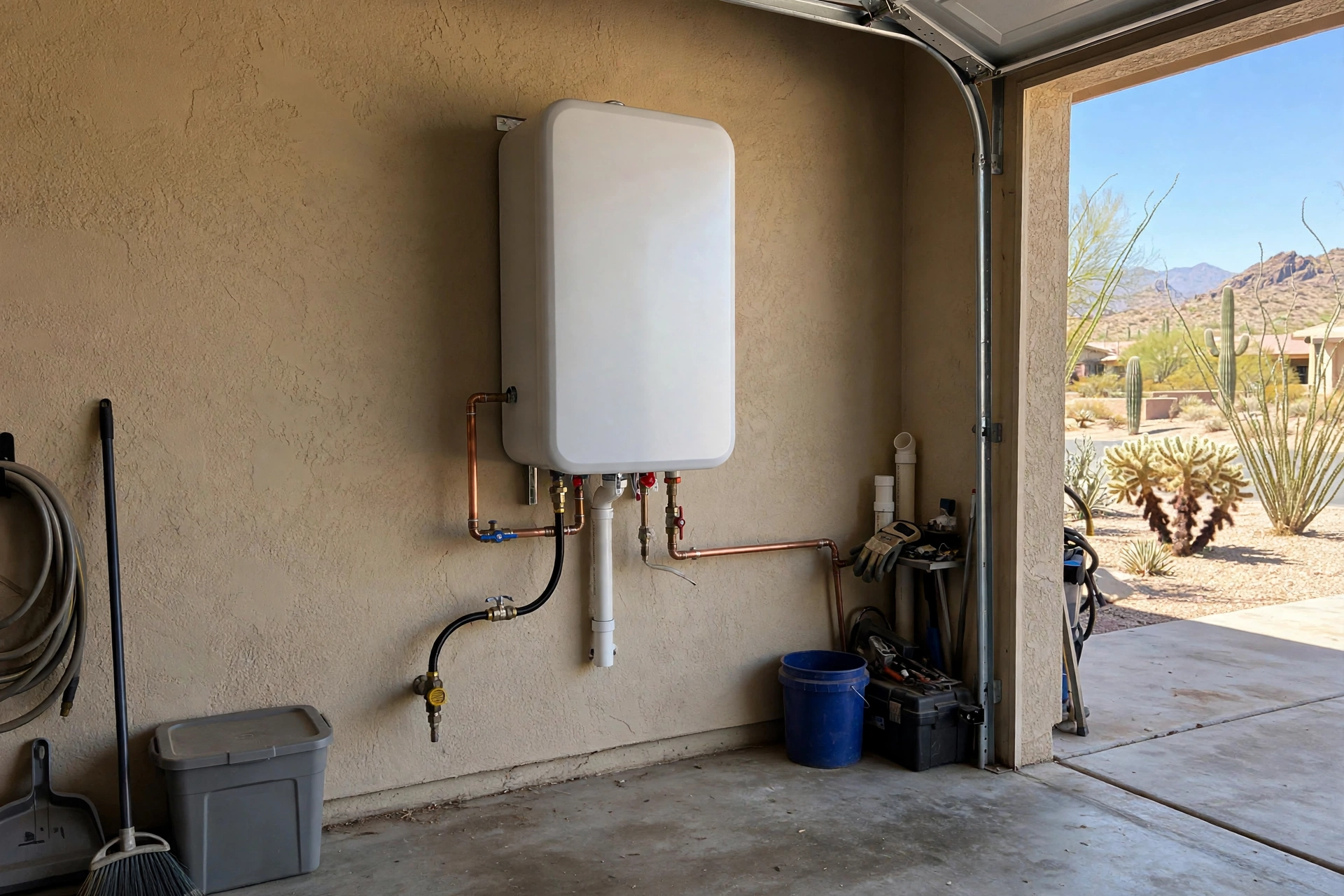
On the cost side, tankless installations in Arizona run higher than the national average when the home needs a gas line upgrade or new venting, which is common in older Phoenix-area homes. Electric tankless units can demand substantial electrical service, sometimes requiring a panel upgrade. A standard tank swap is almost always the lower-cost option upfront. The honest way to compare is total cost over the equipment's life: purchase plus installation, energy use, and expected lifespan in Arizona conditions. Tank water heaters here typically last 8 to 12 years, with hard water and heat pushing toward the shorter end of that range unless the tank is flushed regularly. Tankless units tend to last longer when maintained. If you are weighing the switch, our tankless water heater installation page explains what the conversion involves.
Arizona-specific factors that change the price
Hard water shortens tank life
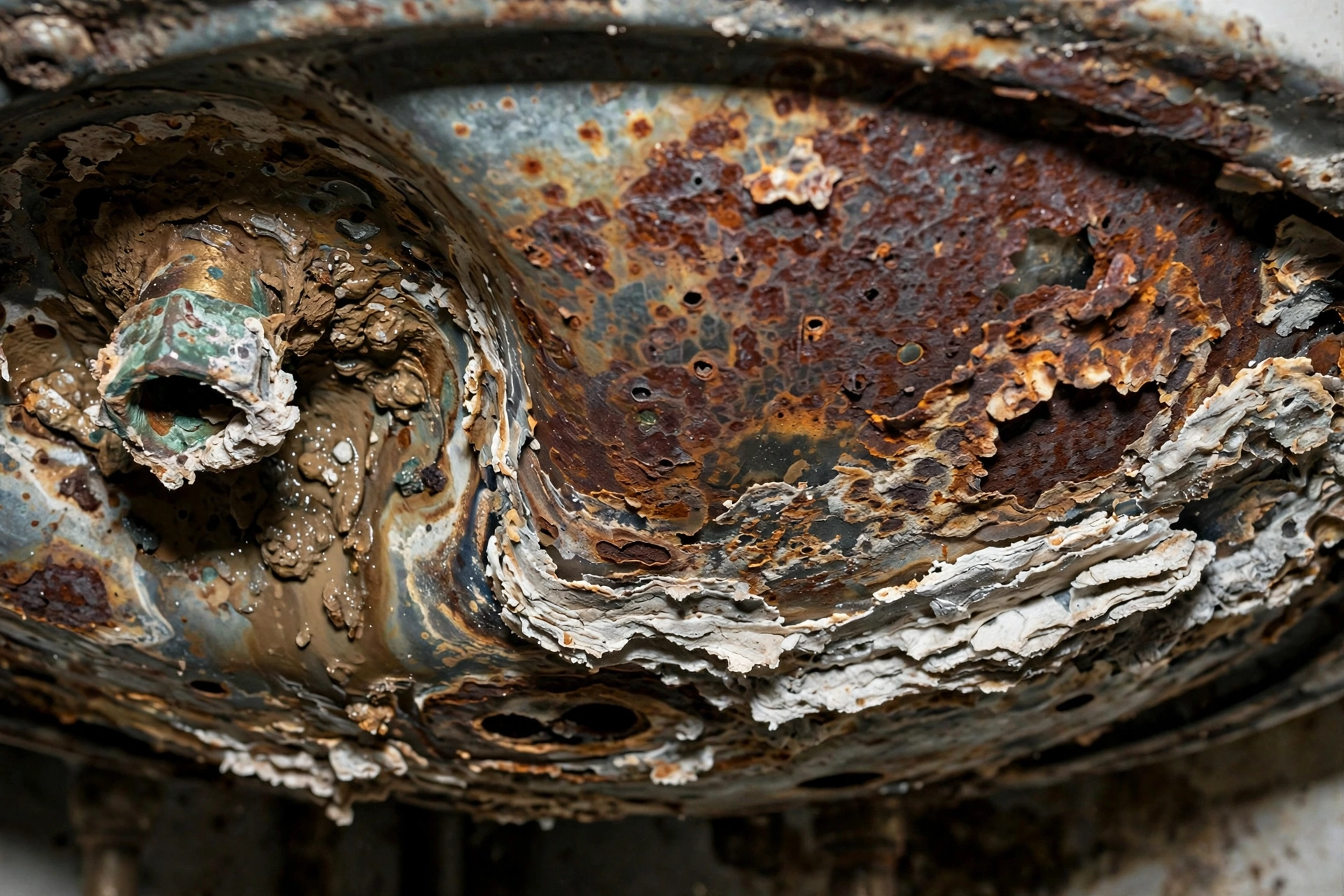
Much of Arizona has very hard water, and that is the single biggest reason tanks here fail sooner than the national average lifespan. Mineral scale coats heating elements, insulates the bottom of gas tanks so the burner works harder, and accelerates corrosion. Annual flushing helps, and a water softener helps more, but many homeowners skip both and then pay for an earlier replacement. If your current tank is 8 or more years old and has never been flushed, budget for a replacement sooner rather than later.
Heat and garage installations
Many Arizona water heaters sit in garages that regularly exceed 100 degrees in summer. Heat itself does not kill a tank quickly, but it accelerates the chemical reactions behind corrosion, and garage installations sometimes mean longer vent runs and trickier code compliance. None of this is a dealbreaker, but it is part of why an Arizona replacement can involve more code-correction work than the same swap in a milder climate.
Permits in Phoenix, Tucson, Mesa, and beyond
Phoenix, Tucson, Mesa, Scottsdale, Chandler, Gilbert, Tempe, and most other Arizona cities require permits for water heater replacement. Permit fees are modest, but the code corrections they trigger are where the money goes. Older installations are the usual suspects: undersized venting, missing expansion tanks, improper T and P relief discharge piping, and gas lines that no longer meet code. A good installer prices these corrections into the bid after seeing the site. Be wary of any quote given sight unseen that claims to cover everything.
Water quality in Flagstaff, Yuma, and rural areas
Water chemistry varies across the state. Flagstaff and higher-elevation areas deal with colder incoming water, which increases recovery demand and can push households toward larger tanks or tankless units. Yuma and desert communities see some of the hardest water in the country. If you are outside the metro areas, mention your water source to your installer, because it affects both equipment choice and maintenance planning.
Real talk: if your tank is over 10 years old, has never been flushed, and sits in an Arizona garage, you are living on borrowed time. A planned replacement lets you shop bids, schedule at your convenience, and avoid the emergency premium. Waiting for the tank to rupture turns a $1,500 planned job into a $2,500 emergency plus water damage cleanup.
Repair vs. replacement: how to decide
Not every failing water heater needs to be replaced. Thermocouples, heating elements, gas valves, thermostats, and anode rods can usually be repaired or swapped without replacing the whole tank, and these repairs typically cost far less than a new unit. Our water heater repair service covers exactly these fixes.
Replacement is the right call when the tank itself is the problem. Rust-colored water, a leak from the tank shell (not a fitting), or a tank past its expected lifespan all point to replacement. The industry rule of thumb is straightforward: if the unit is more than 8 to 10 years old and the repair costs more than about half the price of a replacement, replace it. Spending $600 to repair a 12-year-old tank that could fail again in a year is false economy.
One more consideration: energy efficiency. A 15-year-old tank is far less efficient than a current model. If your energy bills have been creeping up and the tank is old, the monthly savings from a new unit narrow the gap between repair and replacement faster than most homeowners expect.
How to keep the cost down without cutting corners
- Get three written bids. Make sure each one lists the unit model, permit fees, haul-away, and any code corrections. Bids that are not itemized cannot be compared.
- Replace before it fails. A planned water heater replacement avoids emergency premiums and water damage.
- Do not switch fuel types casually. Staying with gas or electric keeps the project in like-for-like territory.
- Ask about rebates. Utility companies and manufacturers periodically offer rebates on high-efficiency and heat pump models. The U.S. Department of Energy's Energy Saver program is a good starting point for current incentives.
- Maintain the new unit. Annual flushing in Arizona's hard water extends tank life, which lowers your cost per year of service more than any discount on installation day.
Frequently asked questions
How much does it cost to replace a water heater in Arizona in 2026?
National industry averages put a standard tank replacement at roughly $1,200 to $2,500 installed and a tankless installation at $2,500 to $5,500 installed. Arizona-specific factors like permit requirements, hard water code corrections, and venting upgrades can move a given job within or slightly above those ranges. These are averages, not quotes.
Do I need a permit to replace a water heater in Arizona?
In most Arizona cities, yes, especially for gas units or any job involving venting changes. The installer typically pulls the permit as part of the job. Permits verify that venting, gas connections, the temperature-and-pressure relief valve, and strapping meet current code.
How long does a water heater last in Arizona?
A standard tank water heater typically lasts 8 to 12 years nationally. In Arizona, hard water and heat often push that toward the shorter end unless the tank is flushed regularly. Tankless units generally last longer when maintained and descaled.
Is it cheaper to repair or replace a water heater?
Repairs like thermocouples, heating elements, and thermostats usually cost a few hundred dollars and make sense on younger units. If the tank is rusting, leaking from the shell, or more than 8 to 10 years old, replacement is usually the better value. A common rule of thumb: replace when the repair would cost more than half the price of a new unit.
Does hard water really affect water heater cost?
Yes. Arizona's hard water causes sediment buildup that reduces efficiency and shortens tank life, which means earlier replacement. Annual flushing and, where practical, water softening extend a tank's life and lower your long-term cost per year of service.
Should I switch to a tankless water heater in Arizona?
Tankless units offer endless hot water and a smaller footprint but cost significantly more to install, particularly if your home needs venting, gas line, or electrical upgrades. They can be a good fit for households with high simultaneous demand or limited space. Compare total lifetime cost, not just the installation price, before deciding.
The bottom line
Water heater replacement cost in Arizona comes down to the type of unit, the complexity of the installation, and the condition of your existing setup. National averages give you a starting range, but the real number is set by what your home needs: permits, venting, code corrections, and whether you are swapping like-for-like or upgrading. The cheapest path is almost always a planned replacement before the old tank fails.
If your water heater is aging, leaking, or leaving you with cold showers, Arizona Water Heater Repair can walk through your setup and give you a straight answer. Call 1 (844) 495-3109 or visit our contact page. Arizona Water Heater Repair, 4649 N 13th St, Phoenix, AZ 85014.
References
- U.S. Department of Energy. (n.d.). Water heating. Energy Saver. https://www.energy.gov/energysaver/water-heating
- U.S. Department of Energy. (n.d.). Tankless or demand-type water heaters. Energy Saver. https://www.energy.gov/energysaver/tankless-or-demand-type-water-heaters
- U.S. Department of Energy. (n.d.). Heat pump water heaters. Energy Saver. https://www.energy.gov/energysaver/heat-pump-water-heaters
- U.S. Environmental Protection Agency. (n.d.). WaterSense. https://www.epa.gov/watersense
- Air-Conditioning, Heating, and Refrigeration Institute. (n.d.). Home page. https://www.ahrinet.org
- Arizona Registrar of Contractors. (n.d.). Home page. https://roc.az.gov
Water heater acting up?
Statewide service across Arizona. Call 1 (844) 495-3109 now.