No Hot Water? A Troubleshooting Guide for Arizona Homeowners
No hot water? Safe troubleshooting steps for Arizona homeowners: gas and electric checks, what to never touch, and when to call a pro.
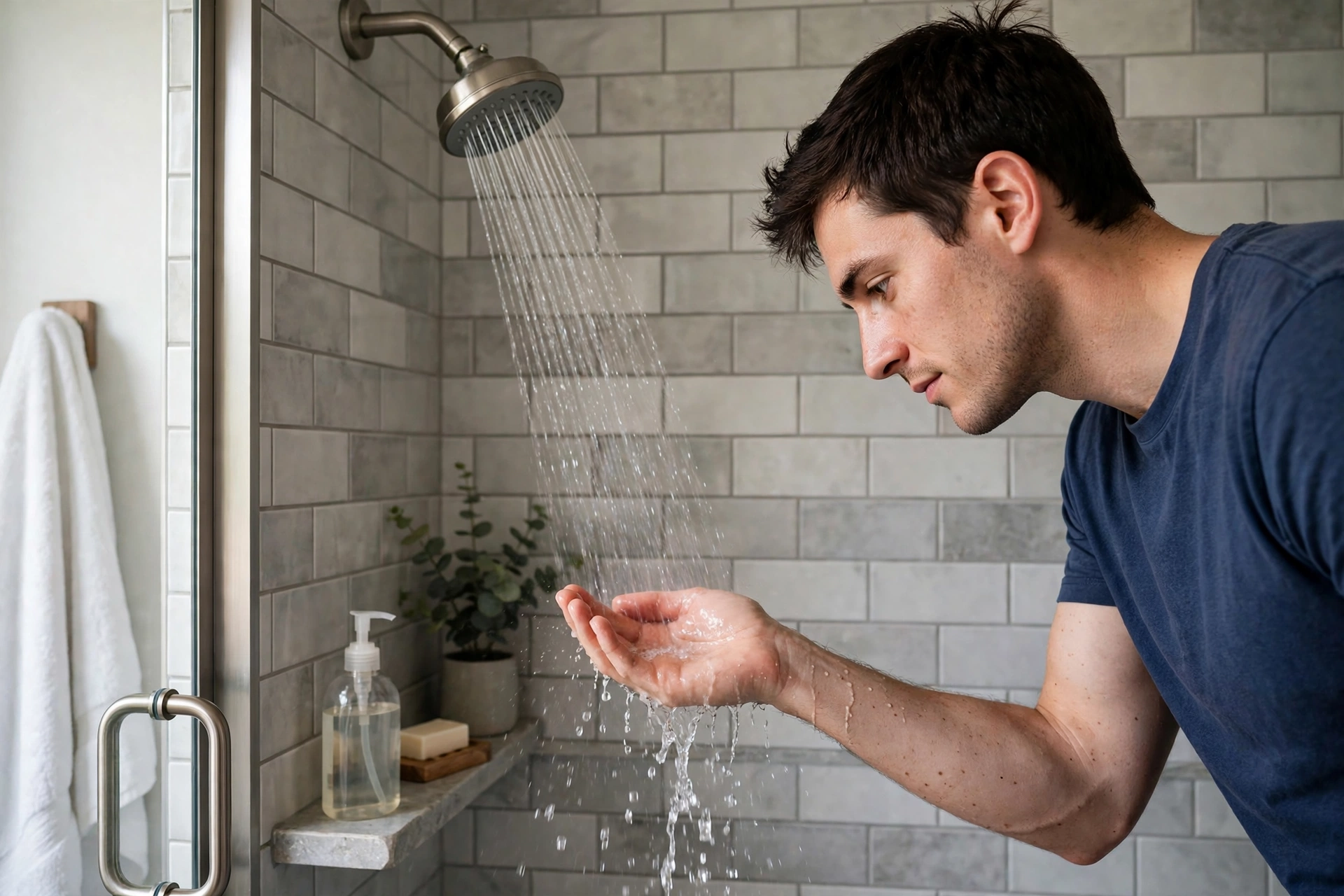
You turn the handle to hot, wait a minute, and the water stays lukewarm or runs cold. Before you call for help, a short list of safe checks can tell you whether the fix is a tripped breaker, a pilot light, or something that needs a professional. This guide walks Arizona homeowners through those checks in order, flags the safety lines you should not cross, and explains what a technician actually does when you call.
First, rule out the whole-house causes
No hot water anywhere in the house usually means the water heater itself stopped working, not a single fixture. If only one shower or sink is cold while everything else runs hot, the problem is more likely a faulty mixing valve or a crossover at that fixture, and the heater is probably fine. The U.S. Department of Energy notes that troubleshooting starts with identifying whether the issue is isolated or house-wide, because the fix is completely different (U.S. Department of Energy, n.d.).
Check these quick things first:
- Is the cold water supply to the heater on? If someone recently did plumbing work or turned a valve for maintenance, the supply valve above the heater may be closed or half closed. It should be fully open.
- Is there hot water at the heater's drain valve? Carefully feel the pipe coming out of the top of the tank (the hot outlet). If it is hot but your taps are cold, the heat is being lost or blocked somewhere between the heater and the fixture.
- Did a new fixture or remodel change the plumbing? Cross connections from new plumbing can let cold water into hot lines. If the problem started right after work was done, call the contractor back first.
Identify your water heater type
Everything that follows depends on whether you have a gas or electric tank, or a tankless unit. Gas units have a pilot light or electronic ignition and a vent pipe going up from the top. Electric units have no vent and no flame; they heat with elements behind access panels. Tankless units are small wall-mounted boxes with no tank at all. If you are not sure, read the label on the side of the unit before going further.
Electric water heaters: the safe checks
1. Check the breaker
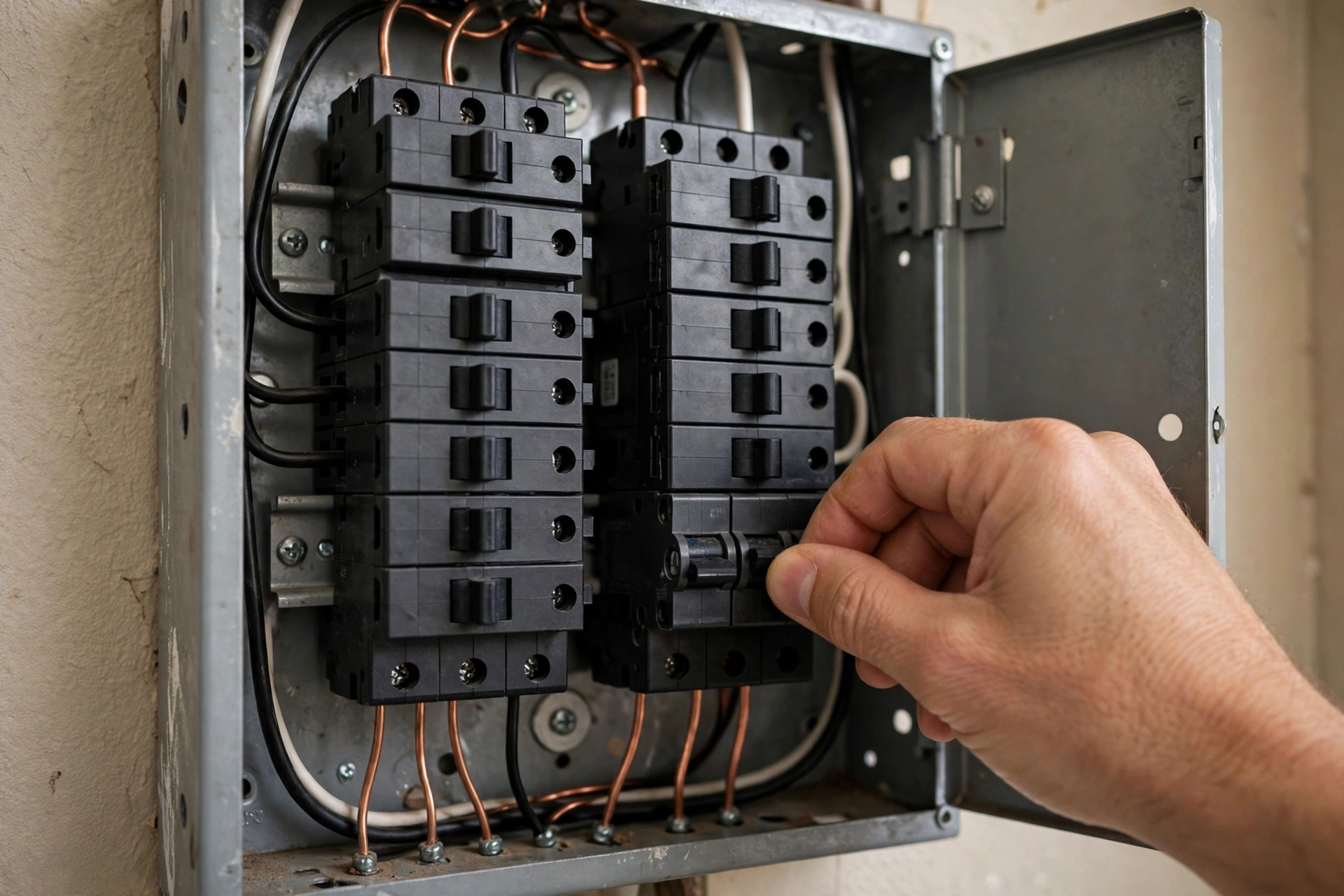
An electric water heater runs on a 240-volt double-pole breaker, and it is one of the most common reasons for a sudden loss of hot water. Go to your electrical panel and find the breaker labeled for the water heater. If it is tripped or sitting in the middle position, switch it fully off, then back on.
One reset is fine. If the breaker trips again immediately or within a day, stop resetting it. A repeat trip points to a shorted heating element, a failed thermostat, or damaged wiring, and all of those need professional attention. Water and electricity do not mix, and a water heater holds both. For anything beyond one reset, see the safety section below and consider calling a licensed electric water heater repair professional.
2. Look for the reset button (ECO)
Electric heaters have a high-temperature cutoff switch, often a small red or black button behind the upper access panel. This trips when the tank overheats, sometimes from a failed thermostat or heavy sediment buildup. It is accessible by removing the panel cover and lifting the insulation.
Safety note: turn off the breaker before removing any access panel. Live 240-volt terminals sit inches from where your hands go. If you are not comfortable with that, skip this step entirely. This is not a step worth getting hurt over.
Press the button once. If it clicks, you have likely found the problem, but the cutoff tripped for a reason, so watch the unit for the next day or two. If it trips again, the underlying cause (often a sticking thermostat or sediment-caked elements) needs to be repaired rather than reset.
3. Check the thermostat settings
Behind the same access panels sit one or two thermostats (upper and lower). They should be set to the same temperature, typically 120°F. The DOE recommends 120°F as the standard setting because it reduces scalding risk and standby energy loss while still meeting most households' needs (U.S. Department of Energy, n.d.). If a thermostat was accidentally turned down, bumped during other work, or drifted, the water may feel merely warm instead of hot.
Gas water heaters: the safe checks
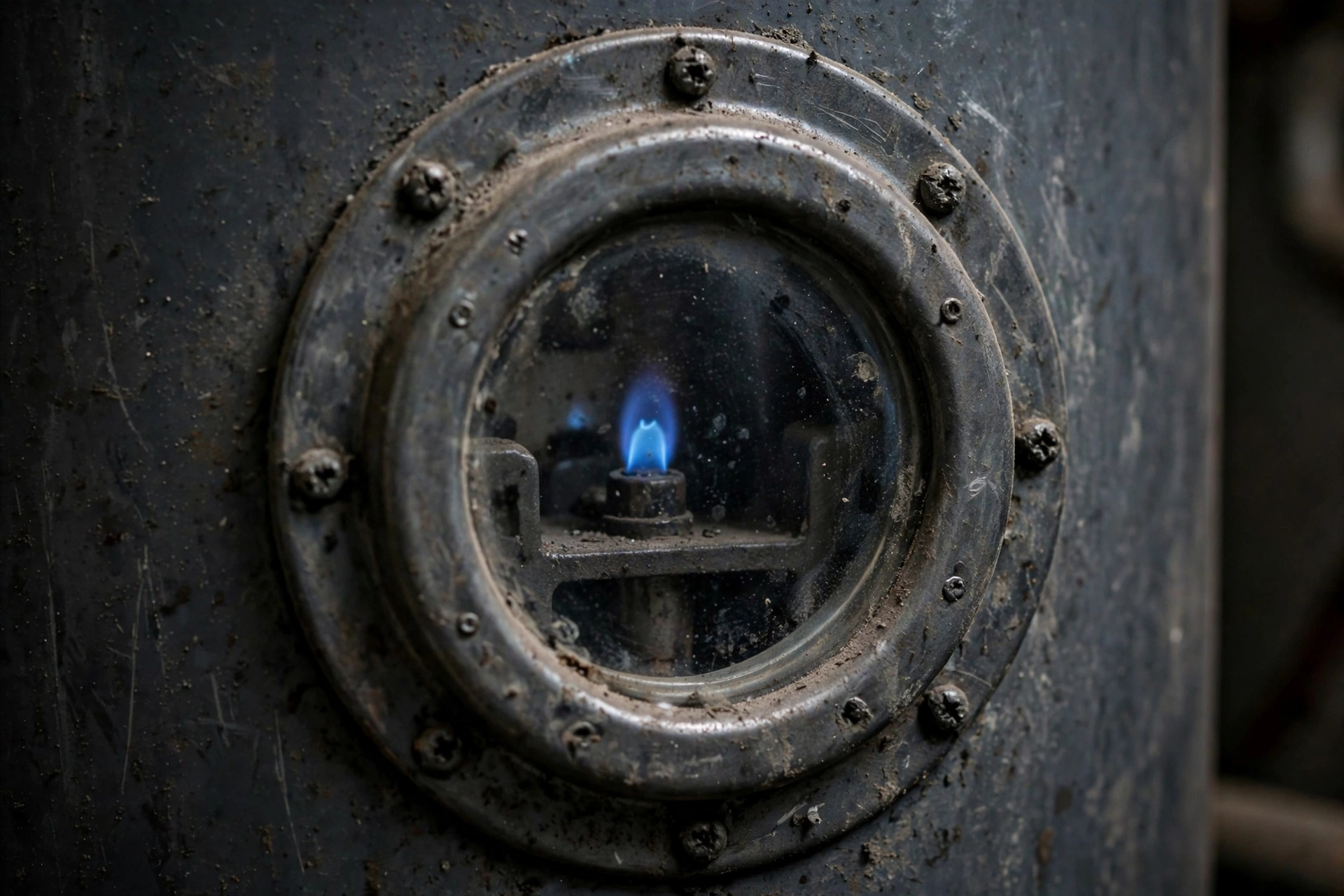
1. Check the pilot light
On gas units with a standing pilot, a blown-out pilot is the most common reason for no hot water, especially after windy weather or if the area around the unit is drafty. Newer units use electronic ignition instead of a pilot and will not have one to relight.
To relight, follow the instructions printed on the unit's label exactly. The general sequence is: turn the gas control knob to off, wait at least five minutes for any accumulated gas to clear, turn it to pilot, press and hold the pilot button while igniting, keep holding for 30 to 60 seconds, then turn the knob to on.
If you smell gas at any point, stop. Do not try to light anything, do not flip electrical switches, leave the house, and call your gas utility or emergency services from outside. Gas utilities treat odor reports as emergencies. The U.S. Consumer Product Safety Commission reinforces that fuel gas leaks demand immediate evacuation before any troubleshooting (U.S. Consumer Product Safety Commission, n.d.).
2. Check the thermocouple
If the pilot lights but goes out the moment you release the button, the thermocouple is the likely culprit. This is a small safety sensor that sits in the pilot flame and tells the gas valve it is safe to keep flowing. When it wears out, the valve shuts off as a safety measure, which is exactly what it is designed to do.
Thermocouple replacement is a routine professional repair. It is inexpensive as parts go, but it involves the gas valve and combustion area, so most homeowners are better off having a technician do it. See gas water heater repair for what that visit typically involves.
3. Verify the gas supply
Check whether other gas appliances (stove, furnace) are working. If none of them work, the issue is with the gas supply to the house, not the water heater. Check whether the gas shutoff valve to the heater is fully open and whether your gas bill is current. In rare cases after utility work, air can enter the line and require several relight attempts.
Arizona-specific causes to know about
Hard water sediment
Arizona has some of the hardest water in the country. Dissolved minerals settle to the bottom of the tank over time, where they form a layer of sediment between the heat source and the water. On gas units, this causes the rumbling and popping sounds many Arizona homeowners recognize. On electric units, sediment buries the lower heating element, which then overheats and fails.
Sediment does two things that matter here. First, it forces the burner or elements to work harder and longer, which raises energy bills and shortens equipment life. Second, it displaces water, so the tank effectively holds less hot water than its rated capacity. If your heater is several years old, has never been flushed, and your hot water runs out faster than it used to, sediment is a strong suspect. Annual flushing is the standard preventive measure, and a professional water heater repair visit can include it.
Real talk: most Arizona heaters I have read about in manufacturer guidance go their whole lives without a single flush, and owners wonder why the tank fails at year eight instead of year twelve. Sediment is not dramatic, but it is relentless.
Dip tube failure
The dip tube carries incoming cold water to the bottom of the tank so the hot water at the top is undisturbed. If the tube cracks or breaks, cold water dumps straight into the top of the tank and mixes with the hot supply. The symptom is distinctive: the water starts hot and turns lukewarm within minutes, even though the tank itself is heating fine.
A failed dip tube is a repair job, not a replacement, though on older tanks it is often found alongside other wear that tips the decision toward replacement. A technician can diagnose it by checking the temperature pattern at the drain valve versus the hot outlet.
Undersized or aging tanks
Sometimes the heater is working exactly as designed and the household has simply outgrown it. A 40-gallon tank that served two people may not keep up when the house fills up, or when a new soaking tub or extra bathroom enters the picture. In Arizona's summer, incoming groundwater is warm, which helps recovery; in winter, incoming water is colder and the same tank delivers noticeably less usable hot water. If the problem is seasonal and predictable, sizing is worth discussing rather than chasing a defect that is not there.
Tankless units: different checks
Tankless water heaters have their own failure modes. If a tankless unit runs cold:
- Check the error code. Most tankless units display a code on the front panel. Write it down before resetting anything; it is the single most useful piece of information for a technician.
- Check gas supply and venting. Tankless units need a large gas supply and clear venting. A partially blocked vent or an undersized gas line causes shutdowns under load.
- Consider scale buildup. In Arizona's hard water, tankless heat exchangers scale up faster than tanks do. Manufacturers recommend periodic descaling, and a unit that has never been descaled can overheat and shut down. This is routine maintenance, not a defect.
- Check the flow rate. Tankless units heat water as it flows. If demand exceeds the unit's capacity (two showers plus laundry in a cold month), the output temperature drops. That is a sizing issue, not a failure.
Safety lines: when to stop and call a professional
Some symptoms mean the safe checks are over and it is time for a professional. Do not continue troubleshooting when you see any of these:
- You smell gas. Leave the house immediately and call your gas utility from outside. Do not operate switches, phones, or appliances inside.
- The breaker trips more than once. A repeat trip means a short or ground fault. Resetting it again is a fire risk.
- Water is leaking from the tank itself. A leak from the tank shell means the tank has failed structurally. Shut off the cold water supply to the unit and call for emergency water heater repair. A leaking tank cannot be patched; it needs replacement.
- You see scorch marks, melted plastic, or a strong burning smell. These indicate overheating or an electrical problem. Turn off power and gas to the unit and call a professional.
- The pressure relief valve is discharging. The temperature and pressure (T&P) relief valve exists to prevent catastrophic tank failure. If it is venting, the tank may be overheating. Do not cap it or plug it. This is a call-a-professional situation, full stop.
The Consumer Product Safety Commission has documented the hazards of malfunctioning water heaters, including scalding and tank rupture risks when safety devices are bypassed or fail (U.S. Consumer Product Safety Commission, n.d.). The T&P valve is the single most important safety device on the tank; never disable it to stop a drip.
What a technician actually does on a no-hot-water call
Knowing what happens during a service visit helps you describe the problem clearly and understand the quote. A typical diagnostic visit follows this order:
- History and symptoms. When did the hot water stop? All at once or gradually? Gas or electric? Any sounds, smells, or leaks? The answers narrow the field before any tools come out.
- Power and fuel verification. The technician confirms voltage at the elements or gas pressure at the valve, rather than assuming the supply is fine.
- Component testing. Elements get tested for continuity, thermostats for correct switching, thermocouples for millivolt output, and gas valves for proper operation. This is how a real diagnosis differs from guessing: each part is tested, not replaced on hope.
- Tank integrity check. The tank shell, fittings, and drain valve are inspected for leaks and corrosion. If the tank itself is compromised, repair is off the table.
- Repair-or-replace recommendation. A failed thermocouple, element, or thermostat on a mid-life tank is usually worth repairing. A rusted-through tank, a unit past its expected lifespan with multiple failing parts, or repair costs approaching a large fraction of replacement cost point toward a new unit.
Real talk: a good technician tells you which parts failed and why, and gives you the repair number and the replacement number side by side. If someone pushes a full replacement without testing a single component, get a second opinion.
Repair vs replace: how to think about it
The decision comes down to three factors: the tank's age, the cost of the repair, and the tank's condition. A standard tank lasts roughly 8 to 12 years, and Arizona's hard water tends to push toward the shorter end without regular flushing. A $150 part on a five-year-old tank in good shape is an easy repair. The same part on a 13-year-old tank with rust at the fittings is money toward a unit you will replace within a year anyway.
As a rough framework, many contractors use a 50 percent guideline: if the repair costs more than half the price of a new installed unit and the tank is past the midpoint of its expected life, replacement usually makes more financial sense. National industry data on water heater costs gives a sense of the ranges, but local quotes are what matter for your decision. For a breakdown of what drives those numbers, see our water heater repair and replacement overview.
Quick reference: symptoms and likely causes
| Symptom | Likely cause | First step |
|---|---|---|
| No hot water at all, electric | Tripped breaker or ECO | Check breaker; reset ECO once (power off first) |
| No hot water at all, gas | Pilot out or gas supply | Relight per label; check other gas appliances |
| Pilot lights then dies | Failed thermocouple | Call a professional; do not force the gas valve |
| Hot for minutes, then cold | Thermostat, dip tube, or sediment | Check thermostat settings; professional diagnosis |
| Rumbling or popping | Sediment buildup | Schedule a flush; heavy cases need service |
| Water leaking from tank | Tank failure | Shut off supply; call for leaking water heater service |
| T&P valve discharging | Overheating or overpressure | Call a professional; never cap the valve |
When to call sooner rather than later
Some situations should not wait for a convenient appointment. Call promptly if you are in Tucson, Mesa, Chandler, Gilbert, Scottsdale, or anywhere in the service area and you notice:
- Any gas odor near the unit
- Active leaking from the tank or fittings
- The breaker trips repeatedly
- Scorch marks or melting around the unit
- No hot water combined with any of the above
If the situation is urgent, you can reach Arizona Water Heater Repair at 1 (844) 495-3109, or visit our contact page to schedule a visit. For persistent no-hot-water problems that are not emergencies, the water heater not working service page describes the diagnostic process in more detail.
Frequently asked questions
Why did my hot water suddenly stop working?
The most common sudden causes are a tripped breaker (electric), a blown-out pilot light (gas), or a tripped high-temperature cutoff. Gradual loss over days or weeks points more toward sediment buildup or a failing heating element. Start with the safe checks in this guide, and stop if you hit any of the safety lines described above.
Can I relight my own pilot light?
Yes, if you follow the instructions on the unit's label exactly and you do not smell gas. Turn the gas control to off, wait at least five minutes, then relight per the label. If the pilot will not stay lit, the thermocouple has likely failed and needs professional replacement. If you smell gas at any point, leave the house and call your gas utility from outside.
How many times can I reset my water heater breaker?
Once is reasonable troubleshooting. If it trips again, do not keep resetting it. A repeat trip indicates a short circuit, a failed element, or damaged wiring, and each additional reset increases fire risk. Have the unit inspected before turning it back on.
Is it safe to shower with a leaking water heater?
A leak from a fitting is one thing; a leak from the tank shell means the tank has structurally failed and the situation can worsen without warning. Shut off the cold water supply to the unit and call a professional rather than continuing to use it. A leaking tank cannot be patched and needs replacement.
Why does my hot water run out faster in winter?
Incoming groundwater is colder in winter, so the heater has to raise the temperature further and recovers more slowly. A tank that felt generous in an Arizona summer can feel undersized in January. If the pattern is strictly seasonal and the unit is otherwise healthy, sizing or a tempering strategy is the conversation to have, not a repair.
Should I repair or replace my water heater?
Consider the tank's age (8 to 12 years is typical), the repair cost relative to replacement, and the tank's physical condition. A failed thermocouple or element on a mid-life tank is usually worth fixing. A rusted tank, multiple failing components, or repair costs approaching half the price of a new unit usually point to replacement.
References
- U.S. Department of Energy. (n.d.). Energy Saver: Heat pump water heaters and water heating troubleshooting guidance. Retrieved from https://www.energy.gov/energysaver
- U.S. Department of Energy. (n.d.). Energy Saver: Water heating. Retrieved from https://www.energy.gov/energysaver/water-heating
- U.S. Consumer Product Safety Commission. (n.d.). Fuel gas safety guidance. Retrieved from https://www.cpsc.gov
- Rheem Manufacturing Company. (n.d.). Water heater troubleshooting and support. Retrieved from https://www.rheem.com
- A. O. Smith Corporation. (n.d.). Water heater support and troubleshooting. Retrieved from https://www.hotwater.com
Water heater acting up?
Statewide service across Arizona. Call 1 (844) 495-3109 now.